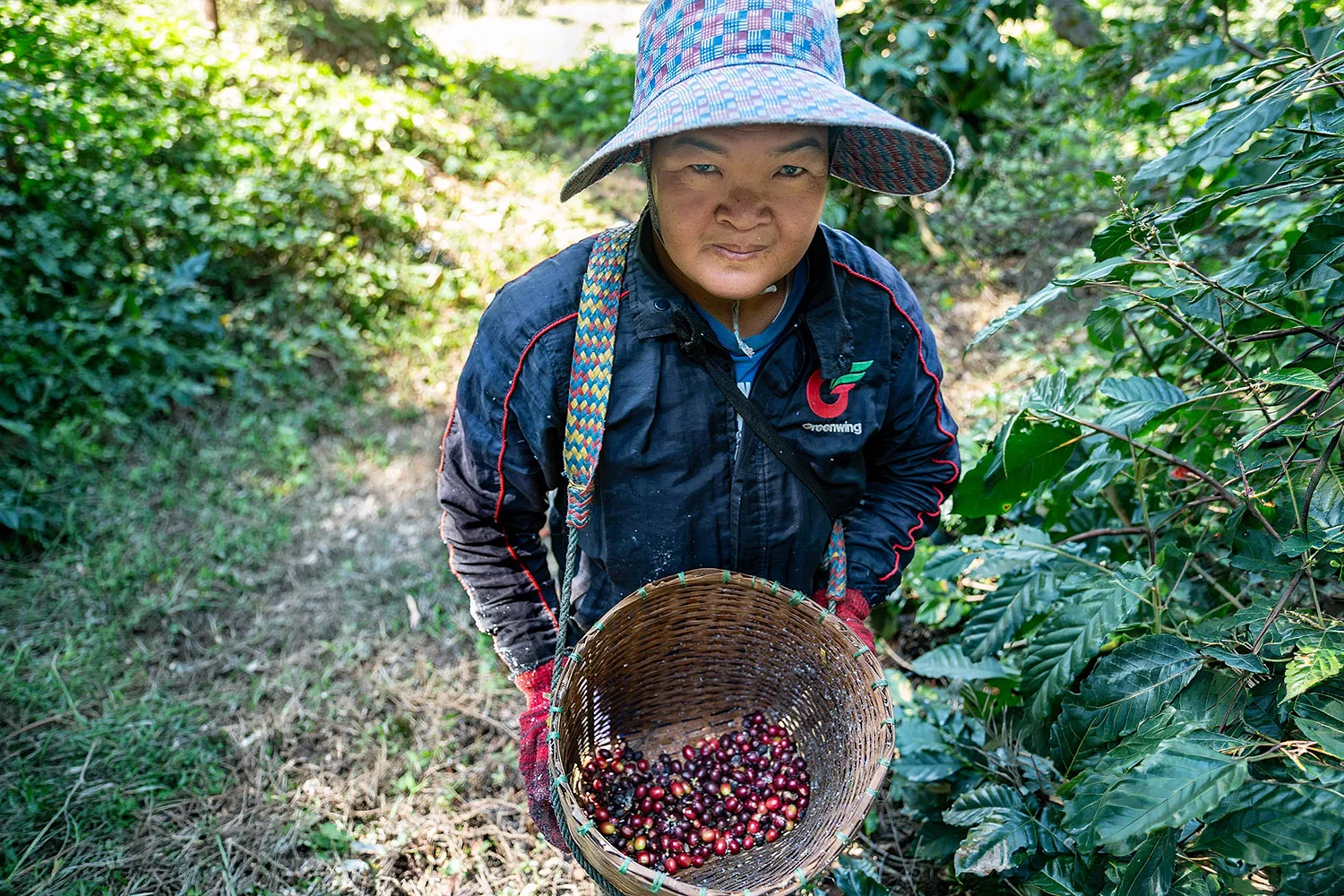
Akha Coffee Farmer
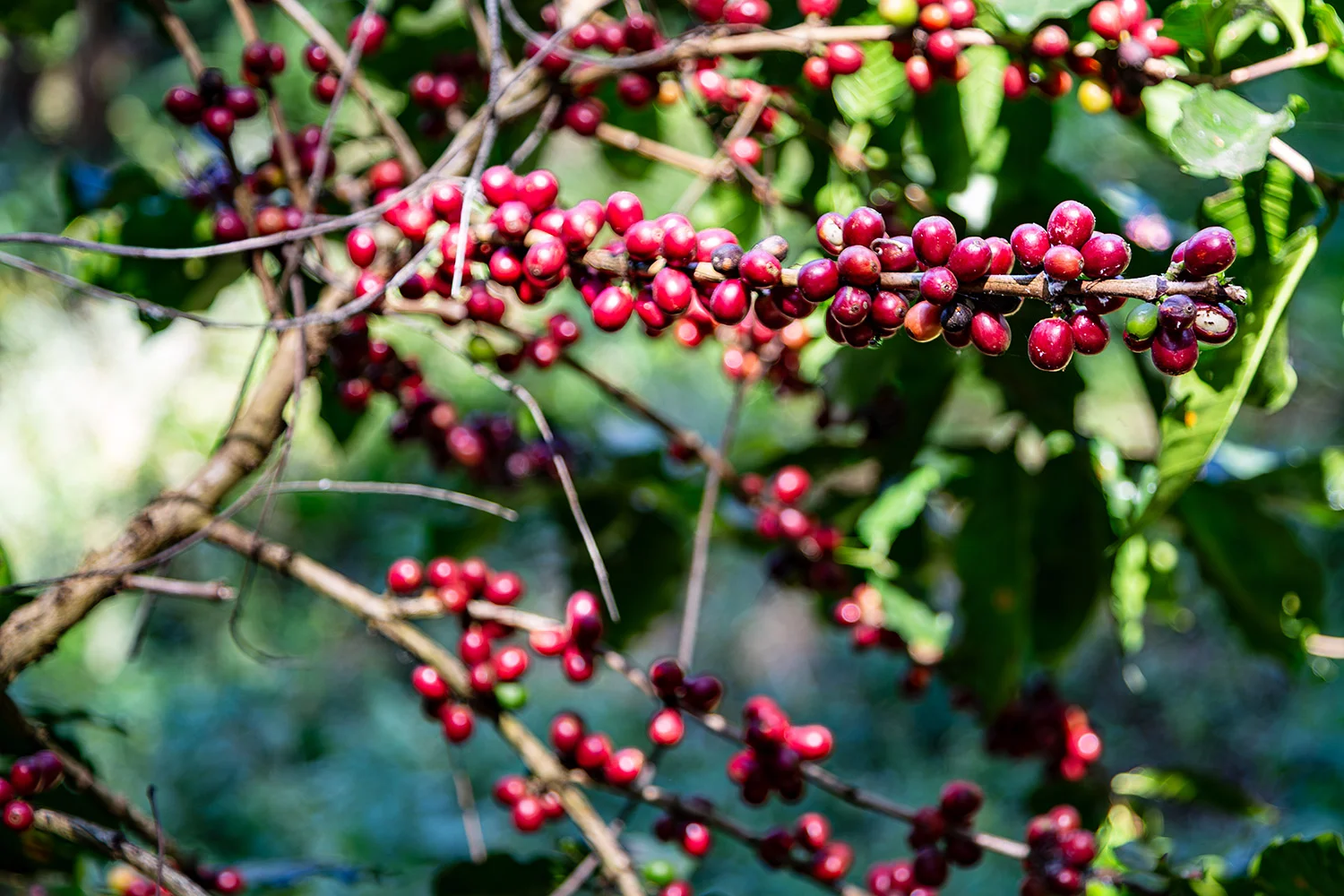
Ripening Arabica Coffee Cherries
For generations, many mountain communities in northern Thailand depended on opium cultivation as their primary source of income. Today, those same hills produce internationally recognised Arabica coffee. Supported by the Royal Projects initiated by King Bhumibol, farmers were given new opportunities through education, sustainable agriculture and access to global markets. The transition not only transformed local economies, but also created new prospects for future generations while helping to restore the surrounding mountain environment.
Doi Chang Coffee, originating from the northern Thai province of Chiang Rai, is globally renowned today for its exceptional premium Arabica. Yet long before the region became associated with coffee, it formed part of the infamous Golden Triangle, one of the world's largest opium-producing areas. For many of the Akha and Lisu communities living in these remote mountains, cultivating opium poppies was often the only viable source of income in an isolated and impoverished region.
Until the 1980s, dependence on opium cultivation contributed to widespread poverty, criminal activity and the continued degradation of mountain forests. The transformation that followed would fundamentally change both the landscape and the lives of the people who called these highlands home.
The crucial turning point began with the Royal Projects initiated by King Bhumibol, heavily supported by the Thai Ministry of Agriculture and international organizations. To offer these hill tribes a legal, sustainable alternative, coffee plants were distributed throughout the high-altitude villages, and essential agricultural knowledge was actively shared. The transition from opium to coffee fundamentally transformed the lives of these indigenous communities. Rather than living in constant insecurity and fear of criminal prosecution, the farmers evolved into proud, legal coffee producers.
A historic milestone was the subsequent establishment of their own farming cooperative. This ensured the farmers did not remain mere raw material suppliers but became the primary owners of the global Doi Chang brand. This economic emancipation sparked unprecedented regional growth. Coffee revenues flowed directly back into the villages, funding the construction of schools, paved roads, and medical clinics, while finally granting the younger generation access to higher education.
Ecologically, this shift was a profound blessing. Today, Doi Chang coffee is cultivated in the shade of native trees, promoting the reforestation and recovery of previously destroyed environments. Doi Chang stands as living proof of how sustainable agriculture can restore dignity, peace, and lasting prosperity to an entire region.