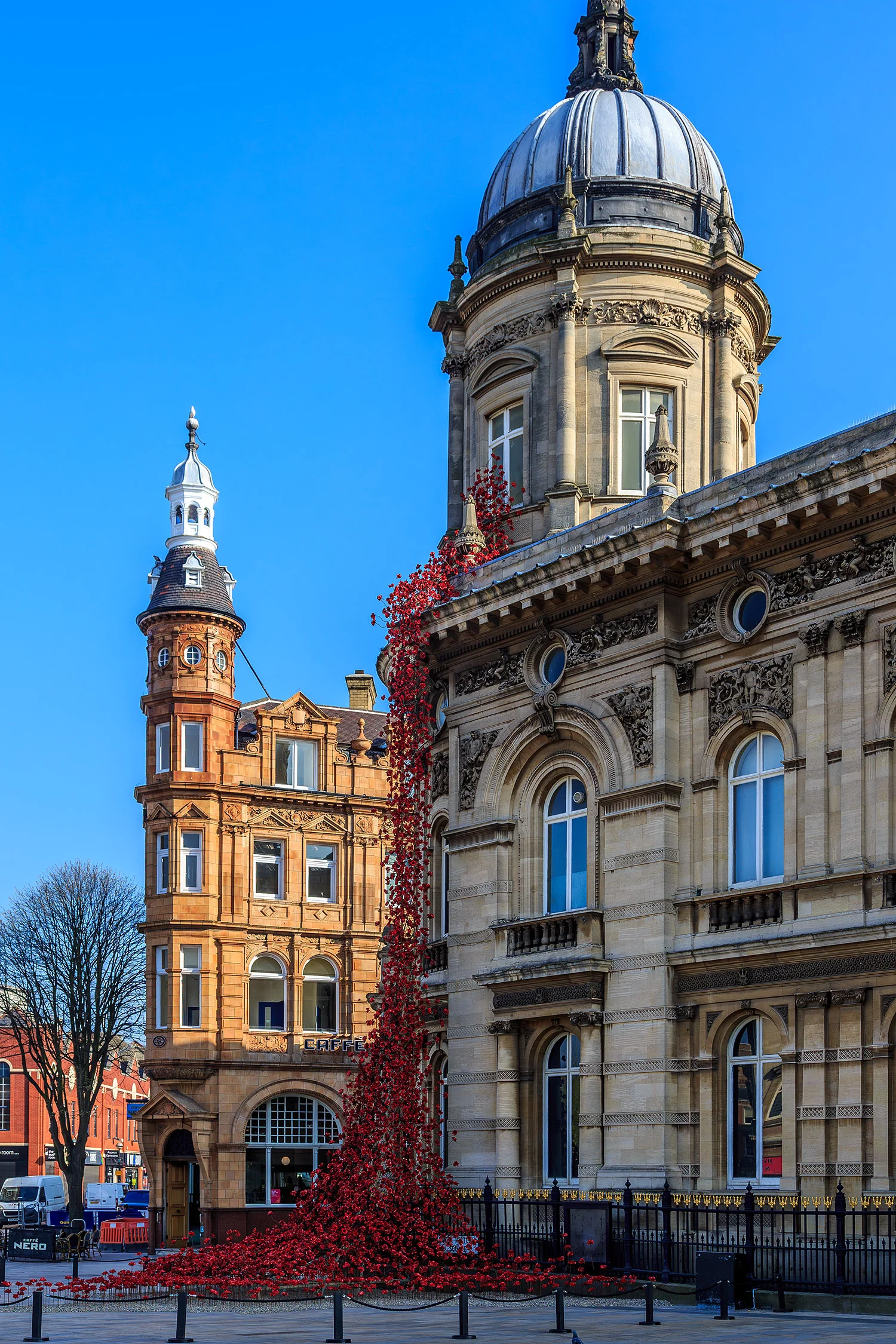
Maritime Museum, Hull
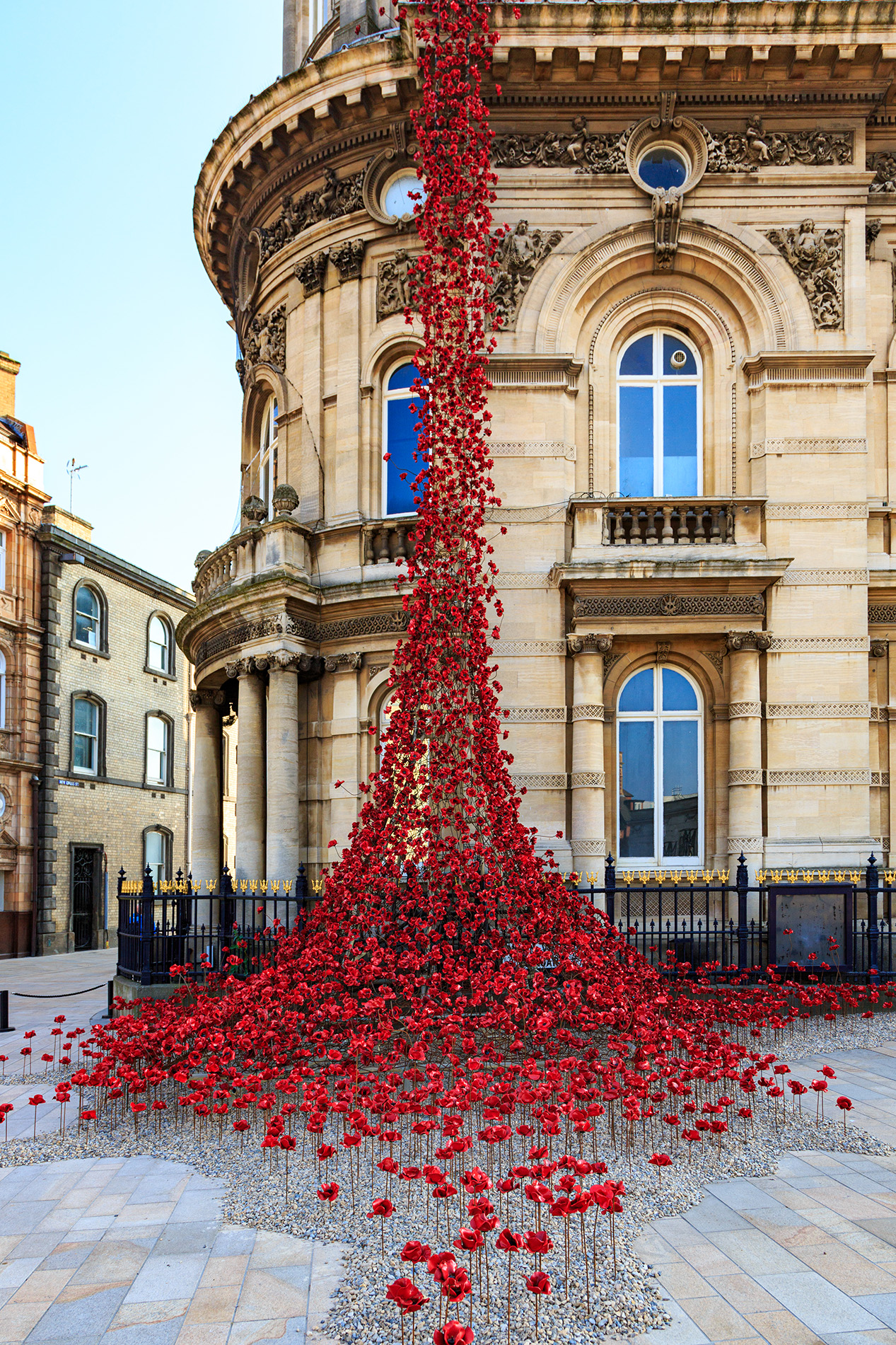
Maritime Museum, Hull
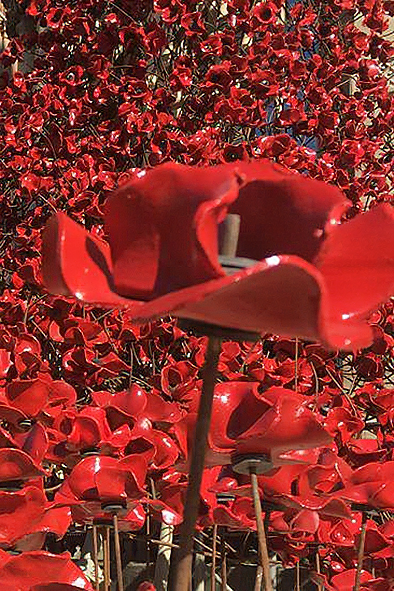
Weeping Window is part of Blood Swept Lands and Seas of Red, a public art installation created to commemorate the centenary of the First World War. Designed by artist Paul Cummins and designer Tom Piper, the installation consists of thousands of ceramic poppies cascading from historic buildings. Each flower recalls the lives lost during the conflict and transforms remembrance into a powerful visual experience.
A sculpture of thousands of handmade ceramic poppies has been erected in Hull to commemorate the fallen of the First World War. "Weeping Window" was presented in the Maritime Museum as part of the Capital of Culture celebrations. The building in the city center, the former Dock Offices, tells the story of Hull's seafarers.
The location was chosen to highlight the sacrifices made by the Merchant Navy and the Royal Navy. The building in Queen Victoria Square witnessed many of the key events of the First World War in Hull. Weeping Window is part of the poppy installation Blood Swept Lands and Seas of Red, which was created to mark the centenary of the First World War and was originally on display at the Tower of London in 2014.
Each poppy in the original exhibition represented a death in the British Armed Forces during the 1914-18 war, totaling 888,246. Artist Paul Cummings and designer Tom Piper created the Weeping Window installation.