Bangkok Graffiti Wall

Colours, Creativity and a Changing City.
Bangkok, Thailand

From Vandalism to Public Art

For many years, graffiti was viewed as vandalism in Bangkok. That began to change with the emergence of a new generation of artists and the launch of the Bukruk Urban Arts Festival in 2013. Large-scale murals transformed neglected districts into open-air galleries, helping street art gain public acceptance. Today, Bangkok's colourful walls have become an important part of the city's cultural identity, attracting both local visitors and international travellers.

When the Walls Began to Tell Stories

A few decades ago, street art was frowned upon in Bangkok. In the early 2000s, graffiti was considered vandalism and was rejected by the majority of the population. But the underground scene continued to flourish, and a small, dedicated group of local artists tried to gain recognition for the art form.

A turning point came with the Bukruk Urban Arts Festival. Inspired by European collaborative projects, the first festival in 2013 brought together Thai and international artists. In once-neglected neighborhoods such as Charoen Krung and Ratchathewi, they created huge murals that transformed the city into an open-air gallery. The success was overwhelming. What began as an ‘invasion’ (‘Bukruk’ means invasion) captured the hearts of residents and visitors alike.

The festival laid the foundation for today's thriving street art scene. A second edition took place in 2016, further cementing the movement and expanding it to include workshops and music events. Famous local artists such as Alex Face with his three-eyed child and Rukkit played a key role in changing the face of the city and making their work an integral part of Bangkok's cultural identity.

Today, remnants and new works from the festival can be found throughout the city. What was once considered an eyesore is now appreciated and celebrated, and tourists flock to the neighborhoods to marvel at Bangkok's colorful and ever-growing graffiti art.

Behind the Lens – Photographer's Note

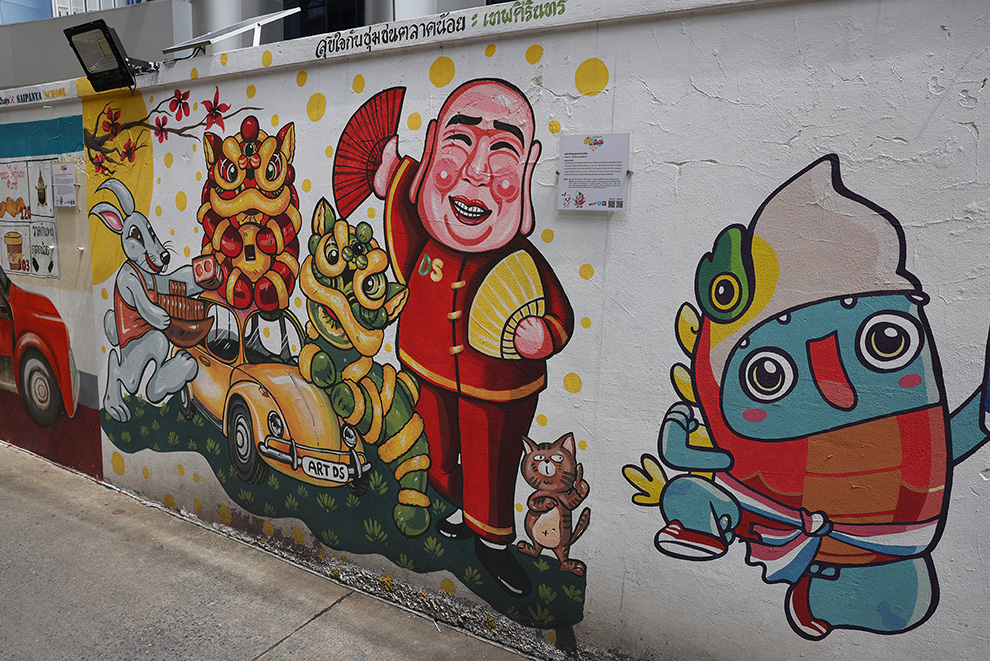
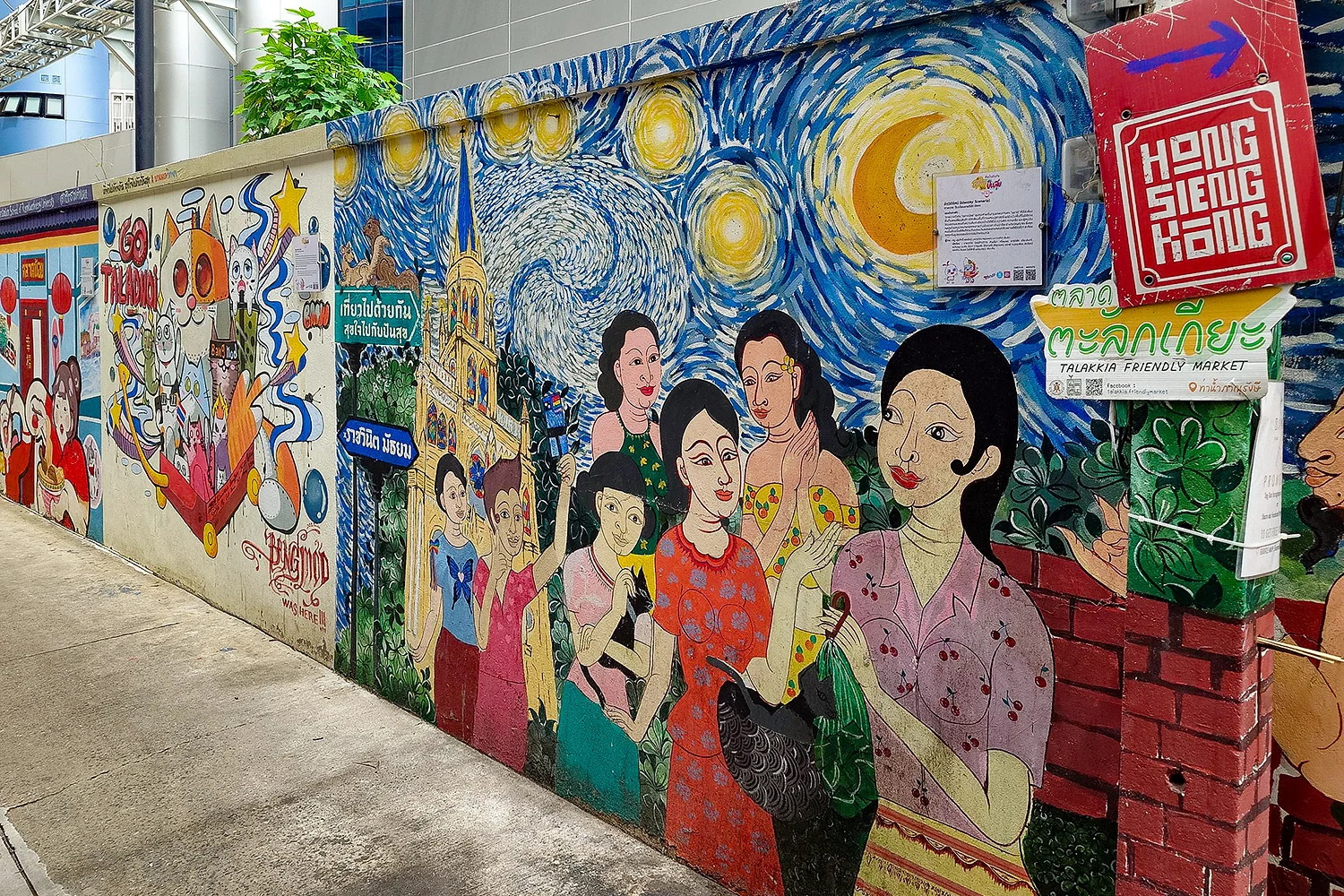
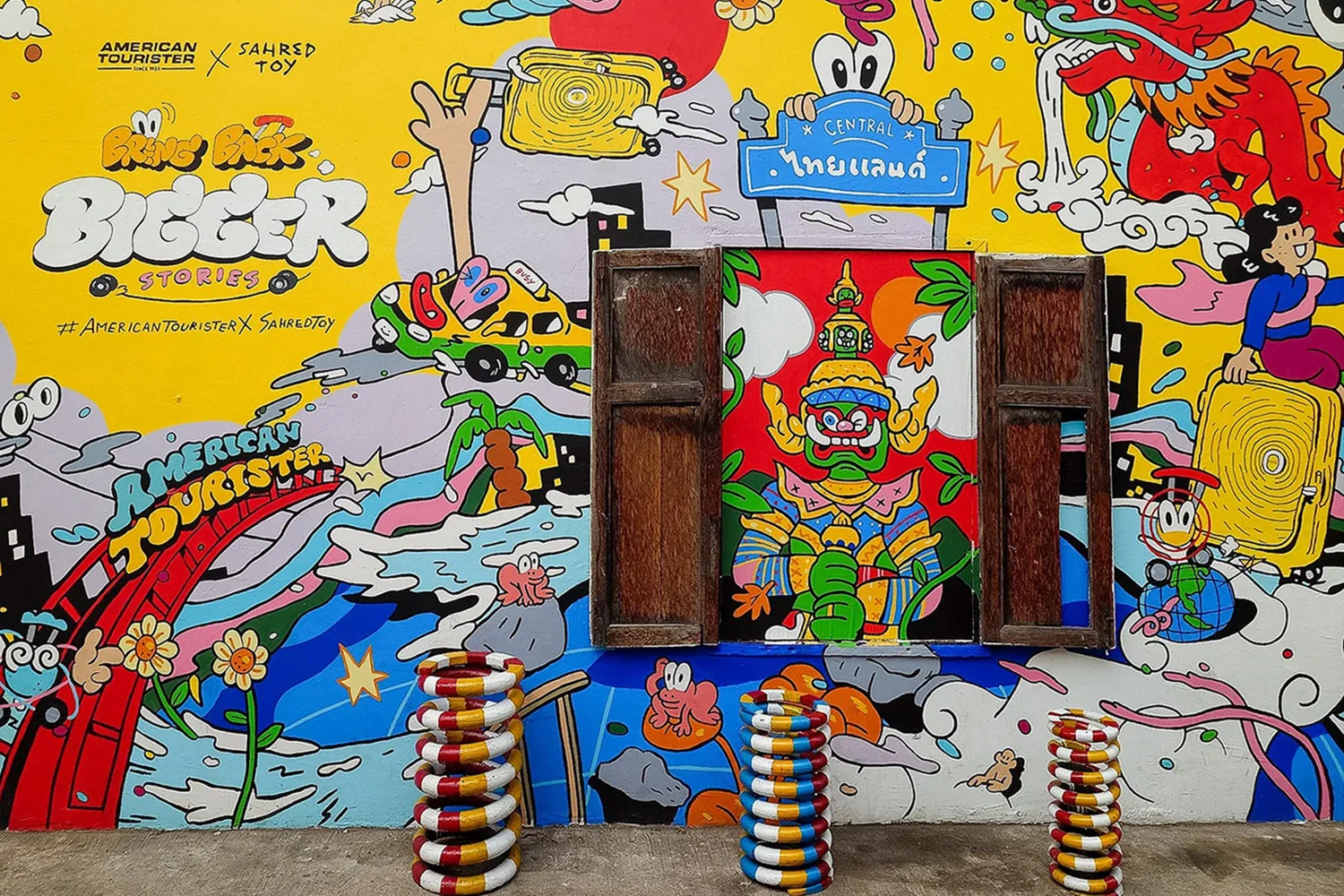
While exploring the Talat Noi district near Bangkok's Chinatown, I wandered through the narrow streets alone, making my way toward the Chao Phraya River. Suddenly I noticed colourful murals covering walls, old buildings and hidden corners of the neighbourhood.

My initial reaction was one of scepticism. In general, I have never liked seeing walls covered with sprayed paint. Too often it feels like vandalism rather than something that adds value to a place. But as I looked more closely, I realised that what I was seeing here was something entirely different.

The murals were not random acts of graffiti. They were thoughtful works of art, created with remarkable skill, imagination and attention to detail. What had first appeared to be visual clutter gradually revealed itself as a creative dialogue between artists and the neighbourhood around them.

While photographing one of the murals, I started a conversation with two young local women. They told me how this once-overlooked part of Bangkok had gradually transformed into a centre for street art and had become one of the city's most popular destinations for visitors and photographers. Through their stories, I began to understand that the murals were not simply decorations. They had become part of the identity of the neighbourhood itself.

This encounter changed the way I viewed Talat Noi. The experience reminded me that travel is often about challenging assumptions. Sometimes a place becomes interesting not because it confirms what we already believe, but because it encourages us to look a second time and discover something unexpected.

What began as a walk through unfamiliar streets became a lesson in keeping an open mind. Talat Noi showed me a side of Bangkok that I had not anticipated, and two spontaneous conversations helped me understand why the neighbourhood had become so special to the people who call it home.