Morocco Beyond the Tourist Gaze

The Driver Who Made Morocco Feel Welcome.
Marrakech, Morocco

Looking Beyond the Welcome

During long drives between Morocco's imperial cities, Ahmed shared much more than directions and travel advice. Our conversations touched on employment, agriculture, regional development and the opportunities many young Moroccans hope to create for themselves and their families. Behind every welcoming smile lies a personal story, and Ahmed's story helped me see a side of Morocco that many visitors never encounter.

Beyond the Tourist Gaze: Morocco Through Ahmed's Eyes

During our journey through Morocco's imperial cities, Ahmed quickly became far more than the driver behind the wheel. During long hours on the road, he shared stories about his country, its people and the challenges and opportunities shaping modern Morocco.

Our conversations covered a remarkable range of topics. Ahmed spoke about regional development, employment opportunities, tourism, agriculture and the hopes many young Moroccans have for the future. Through his perspective, the landscapes outside the window became more than passing scenery. They became part of a much larger story about a country balancing tradition and change.

One subject that returned again and again was opportunity and the future. Ahmed spoke openly about the importance of tourism for many families, but also about the uncertainty that seasonal work can bring. At the same time, he remained optimistic about Morocco's future and the possibilities he saw in education, economic development and innovation.

What made these conversations memorable was not simply the information they contained. It was Ahmed's willingness to share his country honestly. He spoke with pride about Morocco's achievements while also acknowledging the challenges that still remain. Those discussions helped me understand a side of Morocco that rarely appears in guidebooks.

Ahmed's story is a reminder that every encounter offers a glimpse into a life, a family and a perspective we might otherwise never see. By listening to Ahmed, I learned more about Morocco than I could have learned from monuments alone.

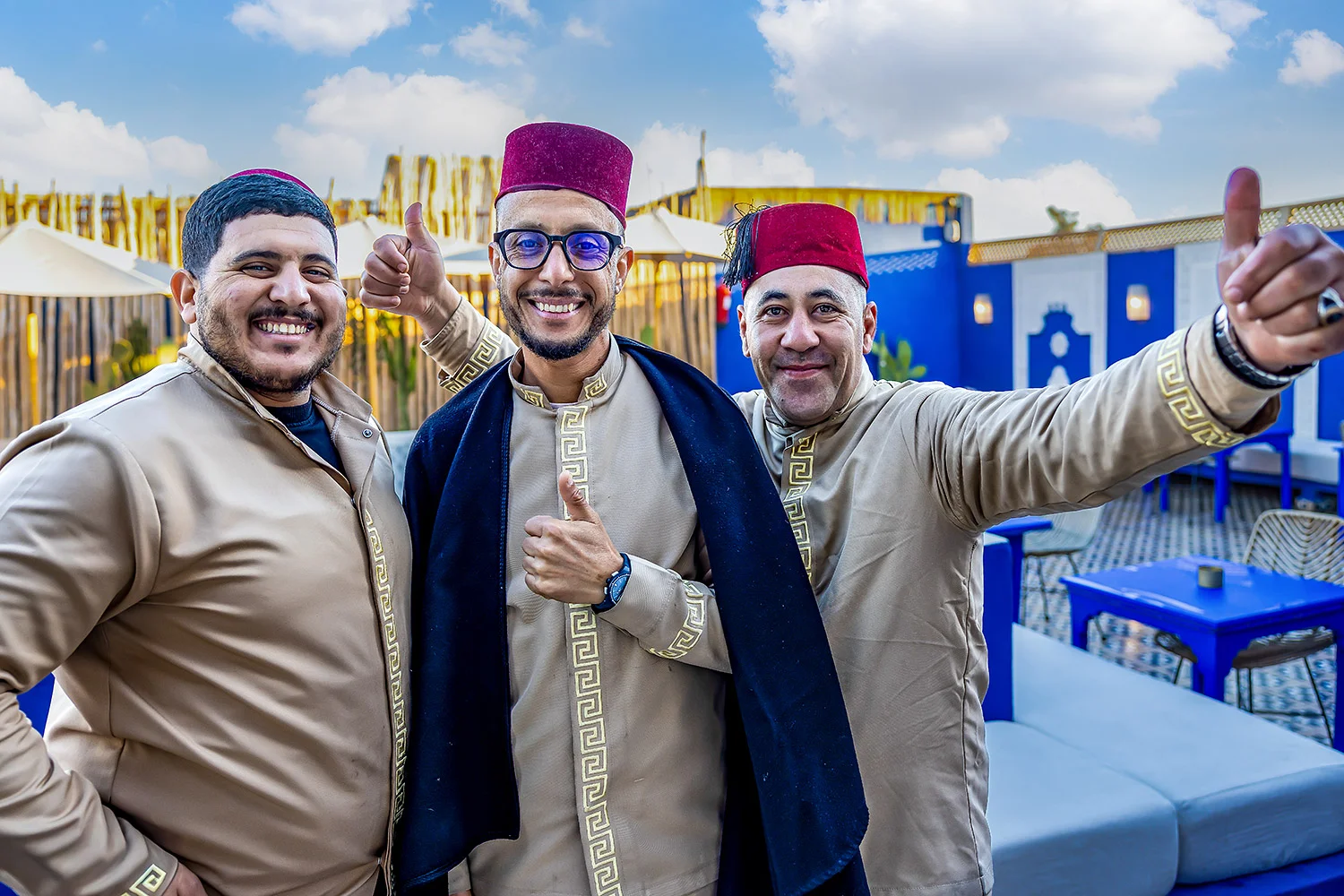
Khout Marrakech Morocco
A Warm Welcome in Marrakech
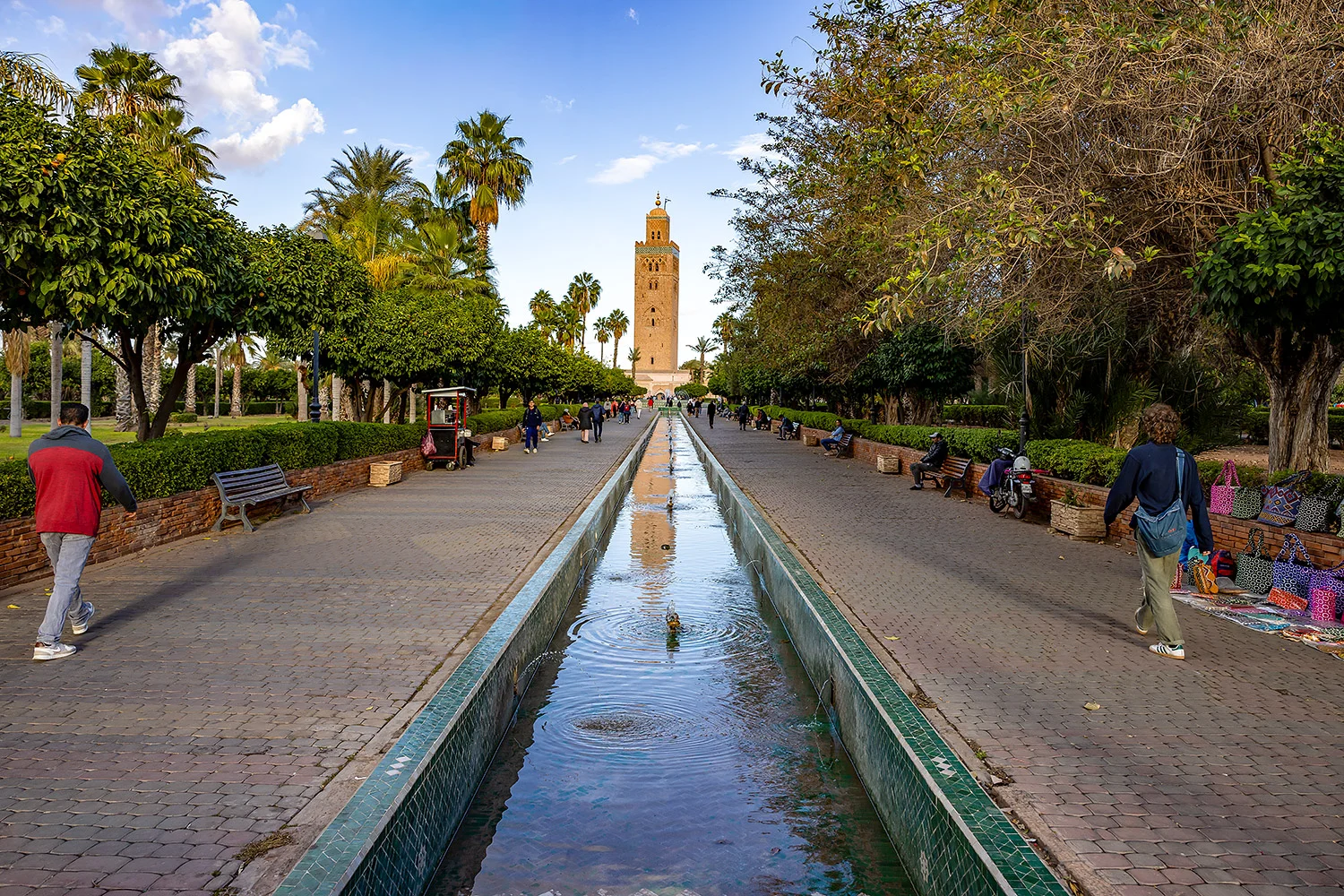
Koutoubia Mosque Marrakech Morocco
Koutoubia Mosque, Marrakech
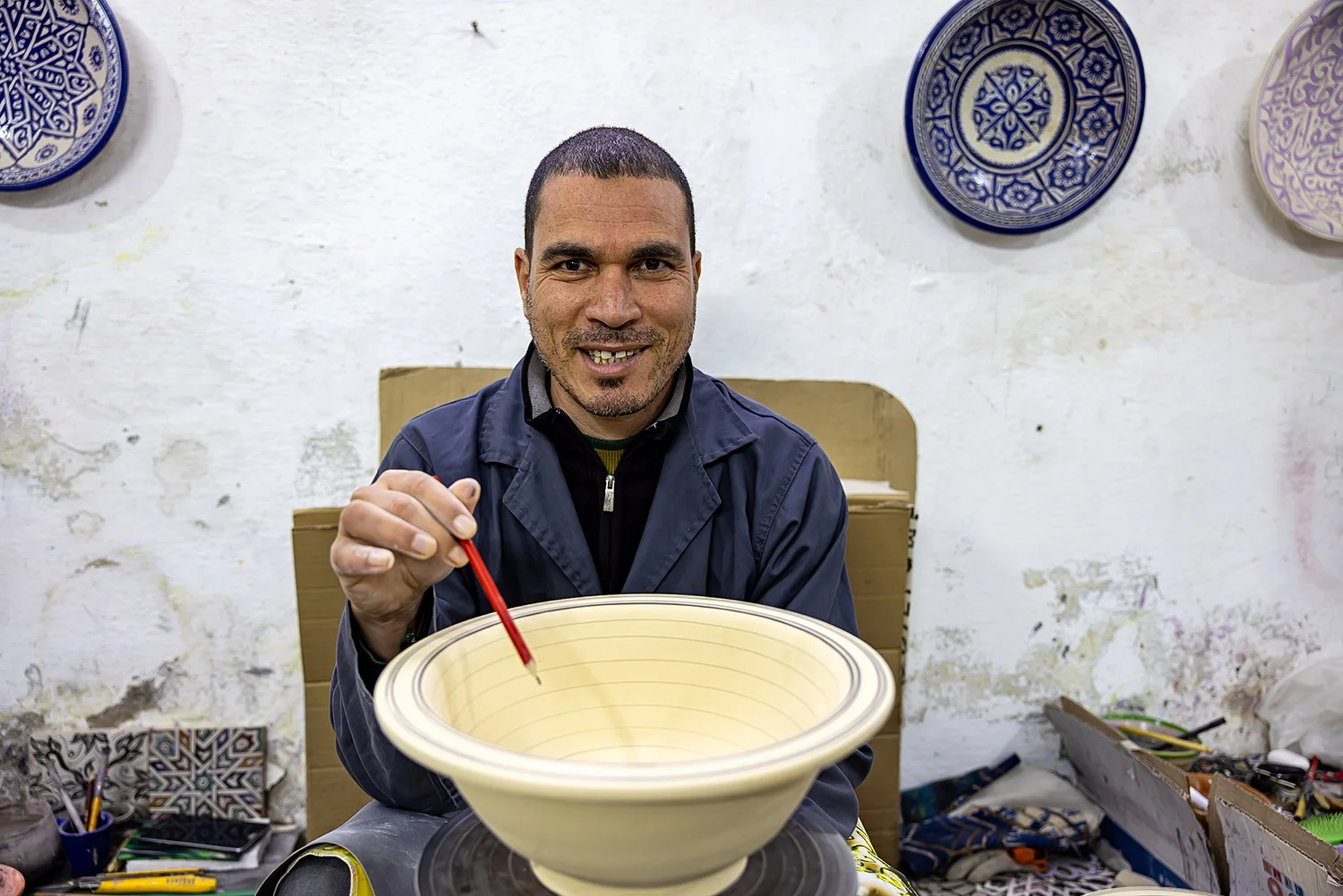
Mosaique et Poterie Fes Morocco
Traditional Pottery, Fes

Behind the Lens – Photographer's Note

Ahmed was our driver during a journey through Morocco's imperial cities. What I expected to be a series of transfers between destinations quickly became something much more valuable. During the long hours on the road, Ahmed spoke openly about Morocco's regions, economic development, employment opportunities, agriculture and the challenges many families face today. Those conversations often became just as memorable as the places we visited.

One day, while driving through the countryside, we passed large fields of prickly pear cactus. What began as a casual remark turned into a fascinating discussion about the future potential of the cactus fruit. Ahmed explained how the plant has become increasingly important in Morocco, particularly in regions where water is scarce. We talked about its nutritional value, its role in sustainable agriculture and the growing international interest in innovative products derived from the cactus.

Ahmed's eyes lit up when we talked about the possibilities this innovation could create for Morocco. As Ahmed spoke about similar opportunities for Morocco, his enthusiasm was impossible to miss. The prickly pear is native to both Mexico and Morocco, and he saw it as more than an agricultural product. He saw it as an opportunity that could benefit rural communities across Morocco.

Our relationship changed unexpectedly in Rabat. Ahmed had dropped us near the historic city walls to save us a long walk. When we returned, he looked unusually distressed. A parking attendant had informed him that he was not allowed to leave the vehicle there and demanded a fine that exceeded what Ahmed would normally earn in a day. I decided to help him by paying the amount.

What mattered was not the amount, but the trust it created. From that moment on, Ahmed no longer treated us simply as customers. He treated us as friends. Throughout the rest of the journey, he frequently stopped at places that never appear in guidebooks: remote villages, forgotten irrigation channels, old stone aqueducts and viewpoints known only to locals. He shared stories, traditions and observations that no organised tour could have offered.

The photographs on this page show welcoming faces, historic places and traditional crafts. Yet what I remember most is not a monument or a landscape. It is Ahmed sharing his thoughts about his country and its future. Encounters like this are the reason I travel and the reason I photograph. They help me understand how people live, what they hope for and how they see the world around them.